
Storage During Home Renovation in St. George, Utah: Sizes, Packing Tips, and Rental Terms
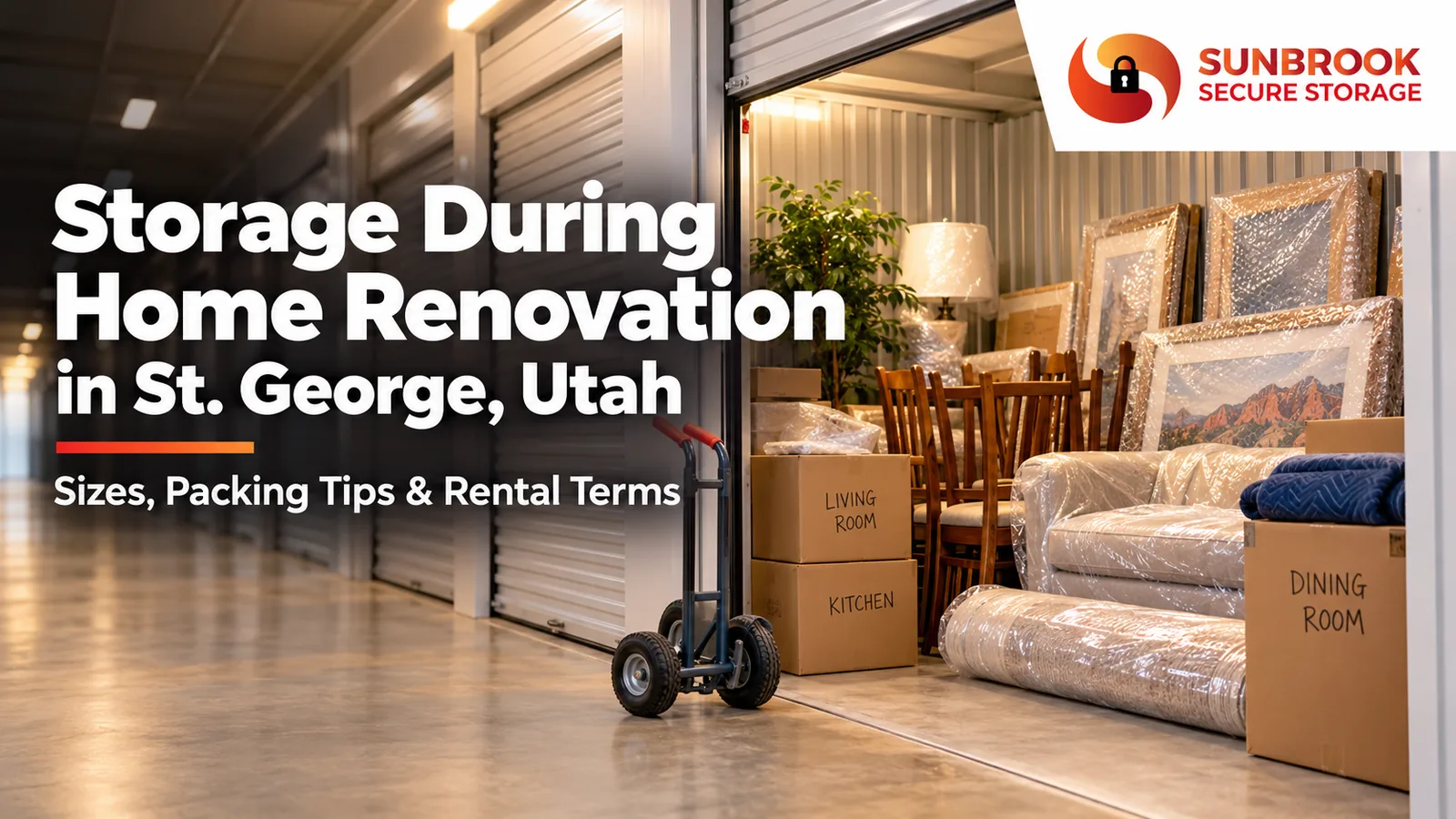
Storage during home renovation in St. George, Utah gives you a place to keep furniture and household belongings while contractors work on your home.
Quick Answer: Storing Belongings During a Renovation
Temporary storage protects furniture, rugs, electronics, and boxed household goods from heavy drywall dust, paint overspray, floor sanders, and accidental site damage during remodeling. Choosing the right space starts with an inventory of the rooms being cleared—from a compact 5x10 for a single room to a 10x15 or 10x20 for multi-room flooring and kitchen overhauls. Month-to-month rental agreements give you flexibility if tile delivery or contractor schedules shift. You can check Sunbrook’s current indoor unit availability and rates online anytime before work begins.
Key Takeaways
- •Clear the contractor’s working area: Contractors work faster, quote labor more accurately, and avoid damaging your possessions when floors, walls, and hallways are completely empty.
- •Measure furniture before choosing a unit: Base your unit size on actual couch lengths, dresser depths, and boxed volumes rather than general room-count guesses.
- •Pack and label room-by-room: Color-code or mark every box with the destination room so moving back in happens without unpacking chaos.
- •Keep everyday essentials accessible: Leave cooking basics, daily work clothes, seasonal bedding, and medications at home in a designated "living zone."
- •Confirm rental and move-out terms: Month-to-month rentals protect you from long leases, but always confirm the notice period and first/final month billing before signing.
When Does a Renovation Call for Storage?
Not every home improvement project requires off-site storage. If you are swapping a powder-room vanity, replacing a single bedroom closet door, or painting a small entryway, sliding furniture to the center of the room under canvas drop cloths is often enough. But major renovations change the entire equation:
Flooring Replacement & Tile Work
New hardwood, luxury vinyl plank, or tile requires an entirely bare subfloor across entire living areas, hallways, and bedrooms. Moving furniture back and forth between rooms every two days adds enormous labor and increases the risk of scratching newly laid floors.
Kitchen Remodeling & Cabinet Installs
Kitchen overhauls generate thick drywall dust, plumbing debris, and frequent crew foot traffic. Storing dining furniture, barstools, small countertop appliances, and pantry overflow prevents them from becoming covered in grit.
Whole-House Interior Painting
Professional painters spray ceilings, trim, and baseboards rapidly. Even with plastic masking, fine overspray and primer dust travel through HVAC returns into nearby sofas, drapes, and rugs.
Multi-Room Overhauls & Layout Changes
Knocking down partition walls or framing new spaces requires heavy equipment, scaffolding, and continuous material staging. Off-site storage gives tradespeople the unobstructed floor space they need to stay on schedule.
For guidance on coordinating whole moves and multi-week projects, explore our dedicated moving and temporary storage options in St. George.
What Should You Move Into Storage?
Focus your storage space on items that are difficult to clean, easy to puncture, or cumbersome for tradespeople to work around. Below is a practical breakdown by renovation project type:
| Renovation Project | Items to Consider Moving | Planning Tip |
|---|---|---|
| Whole-Home Flooring (LVP / Tile / Hardwood) | Sofas, dining sets, area rugs, beds, dressers, bookcases, and floor lamps. | Empty drawers and disassemble bed frames first to reduce weight and speed up staging. |
| Kitchen Remodel & Cabinet Replacement | Dining chairs, barstools, stand mixers, dishware sets, cookware, and decor. | Pack dishes in dish-pack cell boxes with crumpled paper rather than standard thin boxes. |
| Primary Bathroom Overhaul | Adjacent bedroom nightstands, linens, vanity chairs, and fine fabrics. | Dust travels quickly into adjoining closets—seal closet doors or box off hanging clothes. |
| Interior Painting & Drywall Finishing | Upholstered furniture, framed wall art, mirrors, electronics, and curtains. | Wrap wood in breathable blankets; never apply masking tape directly to wood or leather. |
Important: What Stays Off-Site vs. What Is Prohibited
While furniture, rugs, and boxed belongings belong in storage, construction materials, chemicals, and fuels must never enter a storage unit. Facilities strictly prohibit wet paint cans, mineral spirits, paint thinners, gasoline for saws, propane cylinders, adhesives, and open cleaning chemicals.
Before packing, review our official guide on what items cannot be stored in a storage unit to ensure safe and compliant storage.
What Size Indoor Unit Do You Need for Renovation Storage?
The right size depends on the specific furniture pieces, whether tables and bed frames can be disassembled, box count, and whether you need a walking aisle to retrieve items before the renovation finishes. Follow this simple 6-step sizing process:
- List your largest items first: Sofas, sectionals, dining tables, mattresses, and armoires dictate the minimum footprint.
- Measure bulky furniture: Note overall length, width, and height so you know what can stand safely on end versus what must rest on its feet.
- Identify items that can safely stack: Uniform, sturdy cardboard or plastic tote boxes stack 4–5 units high, while glass tables, delicate lamps, and upholstered sofas cannot have heavy loads placed on top of them.
- Decide if you need an access aisle: If you may need to pull out a rug, extra dining chairs, or a toolbox mid-project, leave a 2-foot walking aisle through the center of the unit.
- Check doorway clearance: Sunbrook’s indoor roll-up doors accommodate large pieces, but knowing your furniture dimensions prevents surprises on move-in day.
- Ask Sunbrook staff to verify fit: Call our team with your item list to double-check dimensions before reserving.
Realistic Example: Clearing a Furnished Living Room
Imagine clearing an average St. George living room during a flooring tear-out:
- 1 3-cushion fabric sofa (84" × 36")
- 1 accent armchair and matching ottoman
- 1 coffee table + 2 matching end tables
- 1 media console / TV credenza (flat-screen stored separately)
- 1 8x10 rolled area rug
- 12–15 medium-sized boxes containing books, decor, and lamps
A 5x10 indoor unit (50 sq ft) comfortably holds this sample inventory when boxes are stacked neatly against one wall and the sofa rests on its feet. If you are also clearing a formal dining room with 6 chairs, a table, and a china buffet, step up to a 10x10 (100 sq ft) or 10x15 (150 sq ft).
To calculate the exact square footage your belongings require, use our interactive storage size calculator or see full dimensional breakdowns on our indoor furniture storage guide.
Check Current Indoor Sizes & AvailabilityHow to Prepare Furniture and Household Belongings
Renovation dust is fine and abrasive. Taking an afternoon to properly prepare your belongings ensures they emerge from storage clean and ready for your refreshed home:
1. Photograph and Inventory Every Piece
Take quick front-and-back photos of large furniture and snap a picture inside packed boxes before closing them. Keep an inventory note on your phone so you know exactly which box holds your bedding or kitchen tools.
2. Clean and Thoroughly Dry All Items
Vacuum upholstered cushions, wipe down solid wood with a dry or lightly damp microfiber cloth, and wash rugs. Crucially, allow everything to dry 100% before moving it into an enclosed unit; trapping even trace moisture invites mildew.
3. Disassemble Suitable Furniture
Remove dining table legs, detach headboards and footboards from bed rails, and remove desk hutches. Disassembled pieces take up a fraction of the cubic space and avoid snagging doorways during loading.
4. Bag and Secure Hardware
Place bolts, washers, shelf pegs, and allen wrenches into labeled zip-top sandwich bags. Tape the bag securely to the underside of the furniture piece with painter's tape or keep all hardware bags in a single master tool container.
5. Use Breathable Covers—Avoid Tightly Sealed Plastic
Use quilted moving blankets or cotton drop cloths over wood, leather, and fabric sofas. Secure the padding with stretch wrap applied over the exterior of the blanket. Never shrink-wrap raw wood or leather directly, as trapped condensation can cloud wood finishes and promote mildew.
6. Protect Mirrors, Glass, and Fragile Pieces
Pack framed art and mirrors in specialized telescoping picture boxes with corner protectors. Always store glass panels and mirrors standing vertically on their edges rather than flat under weight.
7. Label Boxes by Room and Priority Level
Write the room name and a quick bullet list on two sides of each box. Add a high-visibility sticker or marker star for "Priority Unpack" items that you will need immediately upon moving home.
Organize Storage Around Your Renovation Timeline
A successful renovation storage plan mirrors your contractor's phased schedule. Staging items thoughtfully makes move-in and retrieval quick and painless:
Before Work Starts
- Establish a clean "living zone" at home for daily needs.
- Separate two weeks of clothes, work supplies, and cookware.
- Pack the renovation zones completely before demo crews arrive.
- Move bulky furniture into your indoor unit first (at the back).
While Contractors Work
- Keep the unit aisle clear to retrieve seasonal clothing or files.
- Store contractor materials at home or on-site, not in storage.
- Do not store newly purchased paint or tile thinset in your unit.
- Check in on the project weekly to monitor timeline drift.
Moving Back In
- Confirm punch-list items and final floor cures are done.
- Deep clean drywall dust from home before bringing furniture back.
- Move rugs and large anchor furniture in before opening boxes.
- Notify Sunbrook of your move-out per rental terms.
Indoor Air-Cooled Storage: What St. George Homeowners Should Know
Sunbrook Secure Storage provides indoor air-cooled storage at our facility at 415 S Dixie Drive in St. George. If your renovation takes place during late spring, summer, or early autumn, understanding what air cooling does—and does not—mean is essential:
- Air-cooled moderation: Our indoor systems use air cooling to help moderate indoor temperatures compared to extreme outdoor Southern Utah summer heat.
- Not climate-controlled or humidity-controlled: We do not describe our units as climate-controlled, humidity-controlled, or maintained within a guaranteed temperature range.
- No damage guarantees: While enclosed indoor hallways significantly reduce exposure to direct sun, outdoor dirt, blowing sand, and weather, storage does not guarantee protection from heat, moisture, pests, theft, or damage.
- Dedicated facility storage: Sunbrook is a brick-and-mortar self-storage facility. We do not deliver portable storage containers or provide storage pods parked on your residential driveway or curb.
Learn more about our facility design and indoor unit features on our indoor self-storage units in St. George page.
Costs and Month-to-Month Rental Terms
Renovations are famous for shifting timelines: a custom cabinet run is delayed by ten days, or tile setters discover a cracked slab that requires leveling. Month-to-month storage gives you the freedom to hold your unit as long as your project takes without paying for months you don't need.
Monthly rental costs depend on unit size, current facility availability, and optional or required tenant protection. However, keep in mind:
- Month-to-month still involves a rental agreement: A month-to-month agreement avoids a long multi-month lease, but you still sign a formal agreement outlining payment dates, prohibited items, and facility rules.
- Confirm billing terms in advance: Always verify how your initial month is billed, how the final month is handled upon move-out, and the required advance notice for vacating.
- Ask about tenant protection: Confirm whether your homeowners policy covers off-site storage or if a tenant protection plan is required at lease signing.
For detailed breakdowns of how storage rates are structured in Southern Utah, read our in-depth guides on storage unit costs in St. George and how month-to-month storage agreements work.
Common Renovation Storage Mistakes to Avoid
1. Reserving Before Measuring Furniture
Guessing that a 5x5 will hold a sectional often leads to a frantic upsize on moving morning. Measure your three longest items first.
2. Packing Essential Items Out of Reach
Burying winter coats, checkbooks, work monitors, or school supplies at the very back of a full unit makes retrieval a full-day chore.
3. Storing Damp Belongings
Mopping furniture or shampooing rugs right before loading traps moisture. Ensure everything has dried for 48 hours before storage.
4. Assuming Schedules Never Slip
Planning for a project to finish in exactly two weeks often causes stress. Choose month-to-month flexibility so you stay in control.
5. Forgetting to Confirm Move-Out Notice
Most facilities require advance written or verbal notice before your next billing cycle. Confirm notice requirements when you rent.
6. Choosing Purely on the Lowest Rate
An outdoor drive-up locker that exposes furniture to direct sun and road dust can cost far more in cleaning than an indoor air-cooled unit.
Frequently Asked Questions About Renovation Storage
Can I rent indoor storage while renovating my home?
Yes. Many St. George homeowners use indoor storage units during flooring replacement, interior painting, kitchen remodeling, and whole-home transitions to keep furniture and boxed belongings clean and out of the contractor's way.
What size unit do I need for furniture from one room?
A 5x10 indoor unit (50 square feet) typically accommodates the core furniture from a furnished living room or standard bedroom—such as a sofa, coffee table, armchairs, and stacked boxes. If the room has a large sectional, king bed, or large entertainment credenza, a 10x10 may be a safer fit.
Can I access my belongings during the project?
Yes. Sunbrook provides secure, keypad-controlled gate and facility access so you can visit your unit during gate hours to retrieve clothing, seasonal gear, or tools. Leaving an open center aisle in your unit makes mid-renovation visits much easier.
What happens if the renovation takes longer than expected?
Because Sunbrook leases units on a month-to-month basis, you can continue renting your space on a monthly schedule if materials or contractor timelines are delayed. Confirm your billing cycle and move-out notice terms when you sign.
Can I store appliances during remodeling?
Yes, eligible household appliances such as refrigerators, washing machines, and microwaves can be stored. Appliances must be completely drained of water, defrosted, cleaned, and thoroughly dried, with doors propped slightly ajar to prevent mildew. Gas appliances must have fuel lines purged and disconnected; fuel tanks and propane cylinders are prohibited.
Can I store paint or construction chemicals?
No. Storing wet paint cans, mineral spirits, solvents, adhesives, gasoline, propane, or hazardous chemicals is strictly prohibited in self-storage units. Keep contractor supplies safely stored on your job site or in an approved work trailer.
Are Sunbrook’s indoor units air-cooled?
Yes. Sunbrook’s indoor units are air-cooled to help moderate indoor temperatures compared to summer outdoor heat. They are not climate-controlled, humidity-controlled, or maintained within a guaranteed temperature range.
How do I check current prices and availability?
You can check live indoor unit sizes, features, and rates on our Units & Pricing page or call our local office at 435-674-1974 to speak with our St. George team.
Plan Your Renovation Storage with Sunbrook
Clearing your living space before demolition protects furniture, speeds up contractor labor, and eliminates the daily stress of moving items from room to room. Browse available indoor air-cooled units at our 415 S Dixie Drive facility or reach out to our team for sizing recommendations.

About The Sunbrook Team - Your Local Storage Experts
The Sunbrook Team helps St. George homeowners, movers, and businesses protect belongings with indoor air-cooled storage units, moving supplies, and U-Haul rentals at 415 S Dixie Drive.
Related Articles
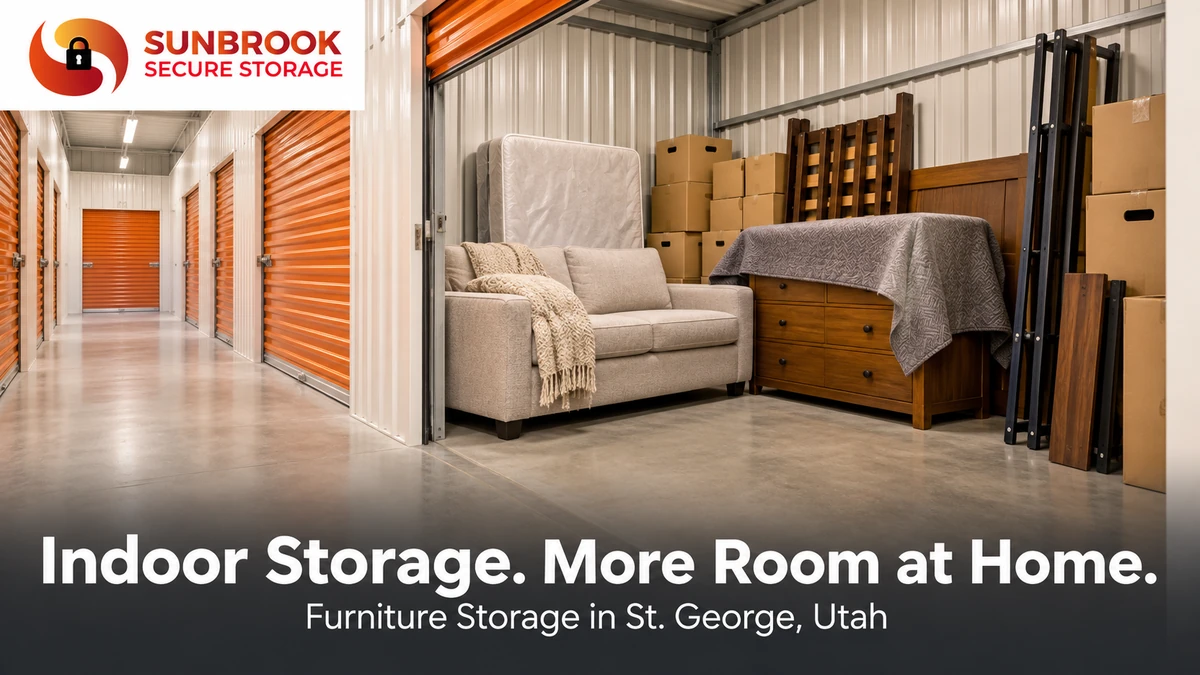
Indoor Furniture Storage in St. George, Utah: Packing Tips, Unit Sizes & Costs
Storing furniture in St. George, Utah? Get packing tips, unit sizing advice, and cost factors for indoor air-cooled storage at Sunbrook Secure Storage.

Storage Units for Snowbirds in St. George, Utah: What to Store Before Leaving for Summer
Leaving St. George for summer? Learn what to store, how to prepare belongings for Southern Utah heat, and how to choose an indoor air-cooled storage unit.
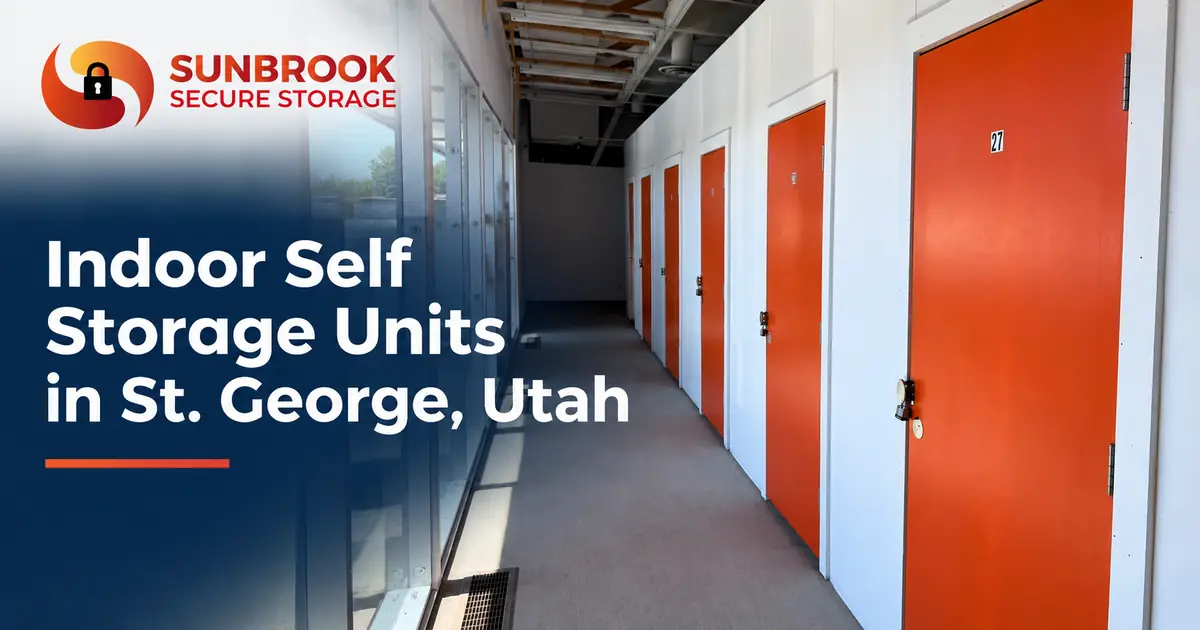
Indoor Self Storage Units in St. George, Utah
Compare indoor storage sizes, security and air-cooled features in St. George. Find the right Sunbrook storage unit and check availability today.