
Indoor Furniture Storage in St. George, Utah: Packing Tips, Unit Sizes & Costs
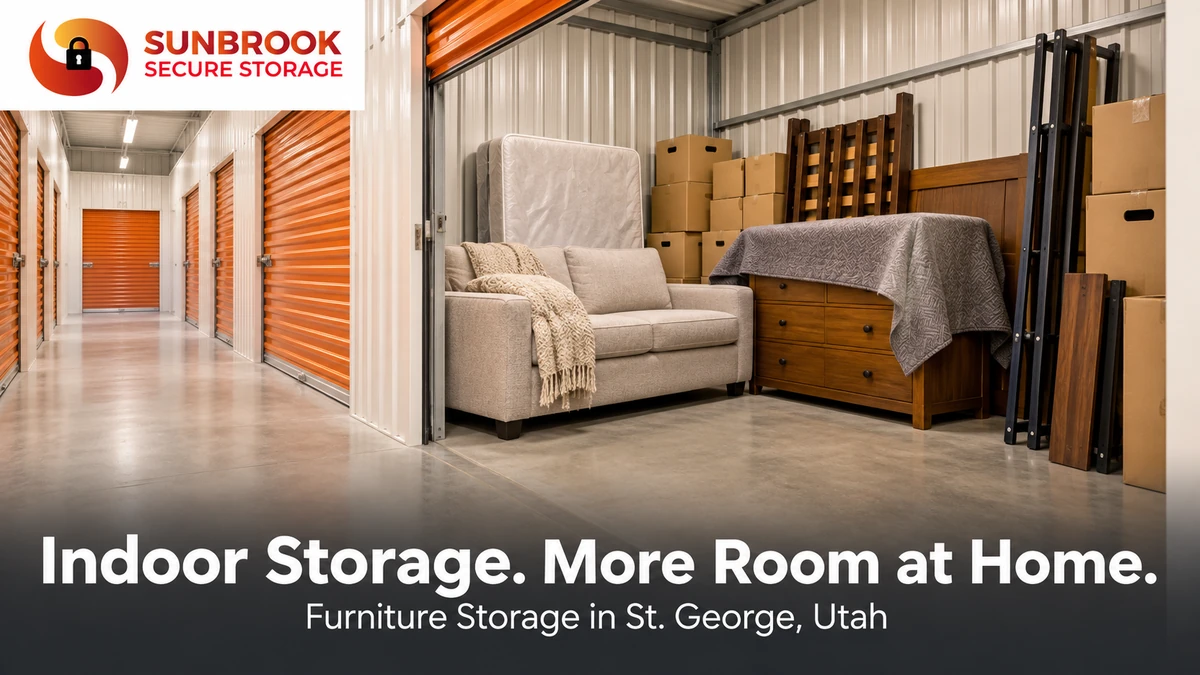
Quick Answer: How to Prepare Furniture for Indoor Storage
To prepare furniture for indoor storage in St. George, Utah, start by thoroughly cleaning and drying every piece. Disassemble removable legs, bed frames, and leaves to save space and reduce strain. Protect surfaces with breathable moving blankets rather than plastic wrap, measure your largest items to select an appropriately sized unit, and plan a central walkway inside the unit for safe retrieval.
At Sunbrook Secure Storage (415 S Dixie Drive in St. George), indoor air-cooled units shield furnishings from desert sun and blowing dust, yet thoughtful packing remains essential for long-term preservation.
Key Takeaways for St. George Furniture Storage
Why Choose Indoor Air-Cooled Storage for Furniture in St. George?
Southern Utah summers bring triple-digit heat, intense ultraviolet rays, and gusty winds that carry red sand across the Virgin River basin. When storing furniture during a move, remodel, or downsizing phase, the physical storage environment plays a direct role in how well pieces weather their stay.
Unlike outdoor drive-up spaces whose exterior roll-up doors face direct desert sunlight and blowing dust, indoor self-storage units in St. George are housed inside fully enclosed buildings. Hallways shield your belongings from wind-driven sand, blowing debris, and solar radiation.
Understanding Air Cooling vs. Climate Control
Sunbrook's indoor facilities utilize air-cooled ventilation to moderate interior temperatures during Southern Utah's hottest summer months. We do not describe our spaces as "climate controlled" or humidity-regulated, and we do not guarantee a specific thermostat range or promise damage-free outcomes. Air cooling substantially tempers extreme afternoon thermal highs compared to uninsulated exterior metal sheds, giving your household goods a much more stable environment.
To weigh drive-up convenience against indoor weather protection, review our detailed comparison of indoor vs. outdoor storage units in St. George.
How to Prepare Furniture Before Storage
A successful storage experience begins at home before anything is loaded onto a moving truck. Follow this step-by-step preparation protocol:
- Inventory and photograph every piece: Walk through each room and record brand names, approximate dimensions, and pre-existing flaws. Take clear reference photos in good lighting to document condition before transport.
- Measure large pieces and check door clearances: Note height, width, and depth of sofas, armoires, and dining tables. Verify that long items will fit through building corridors, doorways, and your chosen unit entryway.
- Clean using material-appropriate methods: Vacuum upholstery cushions, crevices, and mattress seams thoroughly to remove crumbs and hair that could attract insects. Wipe wood down with a mild wood cleaner; treat clean leather with a tested leather conditioner.
- Allow everything to dry completely: Never pack fabrics, rugs, or wood that have any residual cleaning dampness. Allow at least 24 to 48 hours of indoor drying time before wrapping.
- Disassemble only where appropriate: Unbolt dining table legs, take bed frames apart, remove headboards, and lift glass inserts out of frames. Leaving large tables intact wastes valuable floor space and strains joints during loading.
- Label components and secure hardware in labeled bags: Place bolts, screws, washers, and Allen wrenches into sealable plastic bags. Label the bag with the item's name and tape it securely to the underside of the matching furniture piece.
- Choose suitable covers and padding: Wrap finished surfaces with thick textile moving blankets. Use mover tension wrap over the exterior of the blankets to hold them tight. Never adhere packing tape directly to varnished wood, veneers, or leather, as adhesives peel clear coats and leave permanent residue.
- Plan loading and retrieval: Group items logically. Pieces you will need first upon moving back into your home (such as mattresses, bed frames, and a sofa) should go into the storage unit last, nearest the door.
How to Store Different Types of Furniture
Different materials react uniquely to pressure, air circulation, and time. Use this material-by-material reference when packing:
| Furniture Type | Preparation | Covering & Placement | Mistake to Avoid |
|---|---|---|---|
| Sofas & Upholstered Chairs | Vacuum deeply under cushions and along seams. Spot clean stains well in advance so fabrics are 100% dry. | Drape breathable quilted moving blankets or cotton slipcovers. Store horizontally on feet or elevated on wood pallets. | Wrapping tightly in plastic shrink-wrap (traps humidity); stacking heavy sharp boxes directly on fabric cushions. |
| Wood Tables & Dressers | Dust thoroughly; clean with mild wood soap; apply paste wax or conditioner. Detach table legs and secure hardware in a bag. | Wrap in soft moving blankets and edge-guard corners with corrugated cardboard. Secure pads with shrink wrap over the cloth. | Applying packing tape directly to lacquer or veneers; setting hot or wet items on unprotected tabletops. |
| Leather Couches & Chairs | Wipe down with a damp microfiber cloth; let dry; apply a manufacturer-recommended leather conditioner to keep hides supple. | Cover loosely with clean cotton drop cloths or breathable sheets to shield from dust while permitting natural air exchange. | Sealing in plastic wrap (leather must breathe or oils degrade); leaning sharp metal items against leather bolsters. |
| Mattresses & Bed Frames | Vacuum both sides; air out. Follow manufacturer warranty guidance for long-term storage orientation. | Slip into a heavy-gauge breathable mattress storage bag. Store flat on a clean foundation whenever floor space allows. | Storing memory foam or hybrid beds standing on their side (causes internal core foam to sag, shift, and void warranties). |
| Glass Tabletops & Mirrors | Clean with glass cleaner and dry completely. Mark an "X" with painter's tape across the glass surface to dampen vibrations. | Wrap in bubble wrap, pack inside an adjustable picture/mirror box, and store standing on edge between sturdy flat surfaces. | Laying glass flat under boxes (creates catastrophic pressure points); resting bare glass directly on concrete floors. |
What Size Indoor Storage Unit Do You Need for Furniture?
Rather than relying on vague "two-bedroom home" estimates that lead to surprises, size your unit using a real inventory calculation. The cubic volume required depends heavily on whether your furniture can be disassembled, how high you can safely stack, and whether you need an interior walkway.
At Sunbrook Secure Storage, our indoor units feature generous 10-foot ceilings, providing substantial vertical stacking clearance when you utilize uniform storage containers and upright furniture pads.
5×8 & 6.3×8 Units (40–50 sq. ft. / 400–500 cu. ft.)
Studio or Small BedroomFits a twin or queen mattress set (flat or standing depending on construction), an end table, small desk, office chair, and 10 to 15 stacked totes.
5×10 Unit (50 sq. ft. / 500 cu. ft.)
1-Bedroom Apartment Core FurnishingsAccommodates a standard 3-seat sofa, armchair, coffee table, dresser, queen bedroom suite, and 15 to 20 boxed items. Review our dedicated breakdown on what can fit in a 5×10 storage unit.
8×12 & 10×10 Units (96–100 sq. ft. / 960–1,000 cu. ft.)
2-Bedroom Home or Partial RemodelHolds complete living room sets (sofa, loveseat, coffee table, media console), dining table with detached legs, two full bedroom suites, and 30+ packed boxes with an access corridor.
10×15 & 10×20 Units (150–200 sq. ft. / 1,500–2,000 cu. ft.)
3 to 4-Bedroom Household or Full RelocationDesigned for multi-bedroom home furnishings, major household appliances (washers, dryers, refrigerators), patio sets, exercise equipment, and numerous wardrobe boxes.
For help selecting the exact square footage for your personal items, use our interactive storage size calculator or read our guide on what size storage unit do I need.
How Much Does Indoor Furniture Storage Cost in St. George?
Indoor furniture storage costs in St. George, Utah, generally depend on the unit's dimensions, facility amenities, rental length, and current seasonal occupancy. Smaller units for a few boxed items start at budget-friendly monthly rates, while full-house sizes range higher.
As verified on Sunbrook Secure Storage's live pricing schedule (checked September 2026), current indoor self-storage rental rates are:
Boxes, small totes, nightstands
Studio bed, low dresser, boxes
1-bedroom core furniture suite
2-bedroom furnishings & tables
2–3 rooms of furniture & boxes
Full 3–4 bedroom household items
*Rates and unit availability are verified as of September 2026 and are subject to change based on seasonal demand. Visit our live Units & Pricing page or call 435-674-1974 for current space availability.
Questions to Ask Before Renting Any Furniture Storage Unit:
- What is the total move-in cost? Inquire about one-time administration fees, disc lock purchase, or pro-rated initial days.
- Are leases month-to-month? Ensure there are no mandatory 6- or 12-month commitments if your remodel finishes early.
- What notice is required to vacate? Confirm move-out notification deadlines so you aren't billed for unnecessary extra cycles.
- Is tenant protection required? Most facilities mandate tenant insurance or proof of homeowner coverage. Learn about our tenant protection plans.
How to Arrange Furniture Inside Your Unit
A disorganized storage unit leads to scuffed finishes, crushed boxes, and frustration when you need to retrieve a single item. Use these spatial best practices:
- Create an uninterrupted center aisle: Leave at least a 14- to 18-inch walkway down the middle of the unit so you can walk straight to the back without clambering over couches or unloading stacked boxes onto the hallway floor.
- Place heaviest furniture against perimeter walls: Line long walls with heavy dressers, armoires, and flat bed frames. This anchors the unit and creates a solid perimeter.
- Keep frequently needed items near the door: If there is any chance you will need seasonal clothing, holiday decorations, or guest mattresses while stored, place them in the front third of the space.
- Avoid loading heavy weight onto upholstery: Never stack dense book boxes or metal tools on top of couch cushions. Prolonged point pressure crushes springs, dents foam, and stretches fabric permanently.
- Protect surfaces from mutual contact: When resting wood chairs seat-to-seat or stacking disassembled table leaves, always place a quilted pad between surfaces to prevent rubbing and scratches caused by temperature shifts or vibration.
- Utilize vertical dresser cavity space safely: Fill empty dresser drawers with light items like linens, pillows, and curtains. Do not pack heavy books or canned goods inside drawers, which can warp drawer slides and make moving dangerous.
Common Furniture Storage Mistakes to Avoid
Avoid these six frequent pitfalls that can lead to preventable furniture wear:
Washing couch covers or shampooing carpets the morning of move-in guarantees dampness inside an enclosed space, fostering mildew.
Plastic wrap traps environmental humidity against organic materials, causing leather to mold and wood finishes to cloud or bubble.
Adhesive tape reacts chemically with lacquers and polyurethane, stripping stains and leaving sticky residue that ruins wood.
Placing heavy boxes atop flimsy end tables or stacking chairs three high without strapping creates tipping hazards inside the unit.
Glass tabletops placed directly on concrete or tiled floors chip along fragile edges. Always use corrugated cardboard edge-guards.
Renting a unit based on assumptions leads to cramped stacking or paying for 100 extra unused square feet. Always measure first.
Furniture Storage Checklist
Copy or reference this quick on-page checklist when preparing and loading your belongings:
Why Consider Sunbrook for Indoor Furniture Storage?
Located conveniently at 415 S Dixie Drive, St. George, UT 84770, Sunbrook Secure Storage offers a full suite of services tailored to families in transition, home renovators, and new residents moving to Washington County:
Enclosed corridors moderate extreme desert heat and protect against Southern Utah's blowing red dirt and UV exposure.
Substantial vertical stacking capacity gives you extra cubic volume compared to standard 8-foot storage lockers.
Pick up and return moving trucks, cargo vans, and trailers directly at our facility. Learn more about our on-site U-Haul dealership.
Stock up on heavy-duty moving boxes, mattress covers, bubble wrap, packing tape, and disc padlocks right in our rental office at our moving supplies shop.
Whether you are moving across town or relocating from out of state, read our guide to moving and storage in St. George or discover our flexible self-storage options.
Frequently Asked Questions About Furniture Storage in St. George
Can I store a couch in an indoor storage unit?
Yes. Thoroughly vacuum all cushions, spot clean, and allow fabrics to dry completely before move-in. Wrap the sofa in breathable moving blankets or fabric sofa covers rather than shrink-wrap, and store it flat on its feet or elevated on clean wooden pallets.
How should I cover wood and upholstered furniture?
Use breathable textile covers such as quilted moving blankets, cotton drop cloths, or specialized furniture pads secured with mover's stretch wrap over the outside of the padding. Never apply adhesive packing tape directly to finished wood, veneers, or leather surfaces.
Can I store a mattress upright?
Always consult your mattress manufacturer's warranty and care guidelines first. While traditional innerspring mattresses are often stood on edge during transport, memory foam, latex, and hybrid mattresses can sag, shift internal coils, and permanently deform if left upright for extended storage. Storing mattresses flat on a clean, level surface or sturdy foundation is widely recommended.
What size unit do I need for a sofa, dresser, and boxes?
A 5×10 unit (50 sq. ft. with 10-foot ceilings) is typically the ideal fit for a sofa, dresser, nightstands, and 15 to 20 medium storage boxes, while leaving enough walkway room for easy retrieval. If you have extra dining chairs or appliances, an 8×12 or 10×10 unit offers additional working room.
How much does indoor furniture storage cost in St. George?
Indoor self-storage rates depend on unit dimensions, facility location, and current seasonal availability. As of September 2026, verified indoor rates at Sunbrook range from $55/month for a 4×5 unit up to $255/month for a 10×20 full-home unit. Check live online availability or contact our office for current rates.
Is air-cooled storage the same as humidity-controlled storage?
No. Air-cooled indoor storage uses evaporative cooling systems to moderate severe desert heat spikes, keeping indoor building corridors significantly cooler than outdoor ambient summer conditions. However, it does not regulate relative humidity percentages or maintain a guaranteed thermostat range like specialized commercial HVAC climate systems.
Can I rent furniture storage month to month?
Yes. Sunbrook Secure Storage provides flexible month-to-month rental agreements with no long-term lease commitments, making it simple to store furniture during a 2-month home renovation, seasonal relocation, or extended household transition.
Check Current Indoor Storage Unit Availability
Ready to protect your furniture during a move, remodel, or downsizing project? Browse our real-time unit inventory online or contact our on-site St. George team for personalized sizing assistance.

About The Sunbrook Team - Your Local Storage Experts
The Sunbrook Team helps St. George homeowners, movers, and businesses protect belongings with indoor air-cooled storage units, moving supplies, and U-Haul rentals at 415 S Dixie Drive.
Related Articles

Storage Units for Snowbirds in St. George, Utah: What to Store Before Leaving for Summer
Leaving St. George for summer? Learn what to store, how to prepare belongings for Southern Utah heat, and how to choose an indoor air-cooled storage unit.
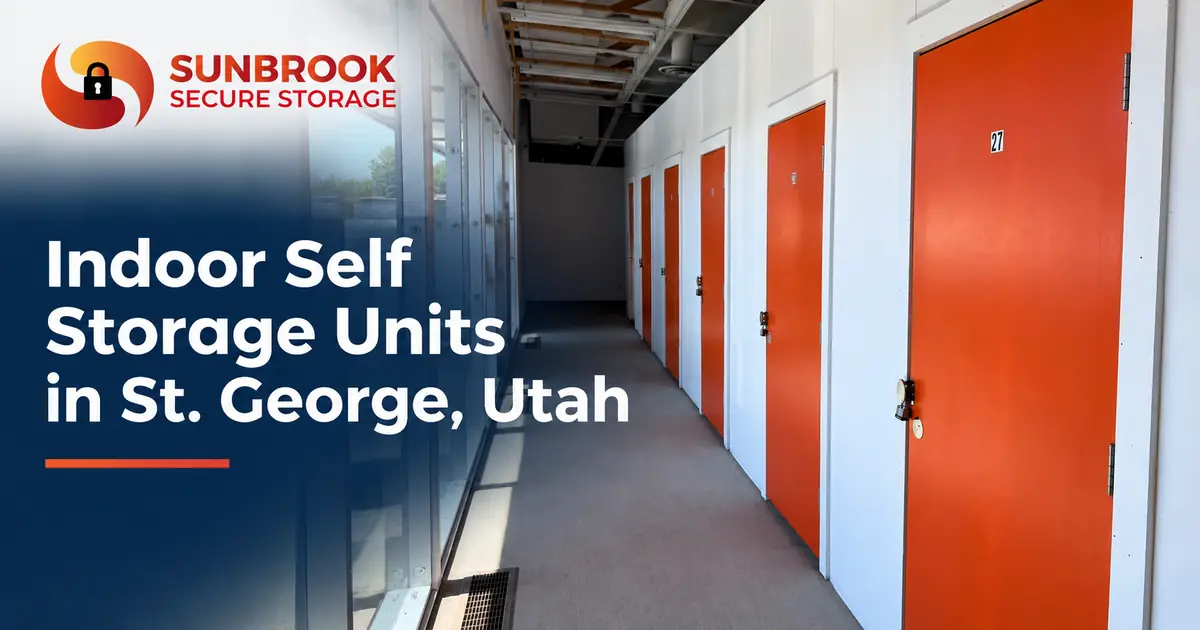
Indoor Self Storage Units in St. George, Utah
Compare indoor storage sizes, security and air-cooled features in St. George. Find the right Sunbrook storage unit and check availability today.
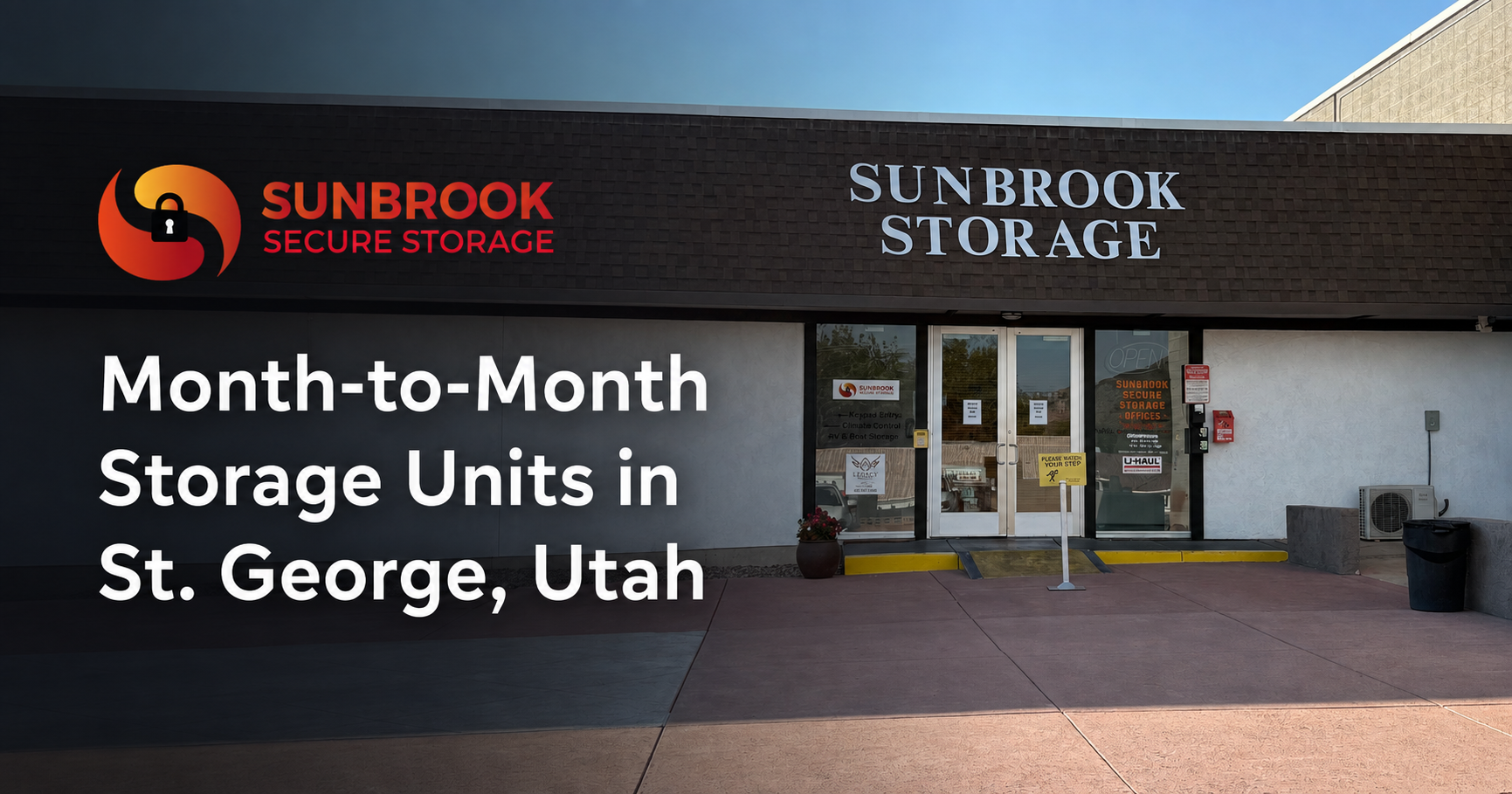
Month-to-Month Storage Units in St. George, Utah: Costs, Terms, and What to Expect
Looking for month-to-month storage units in St. George, Utah? Learn how flexible monthly rentals work, compare costs and terms, and reserve online.