
Covered RV Storage in St. George, Utah: Cost, Sizes, and What to Expect
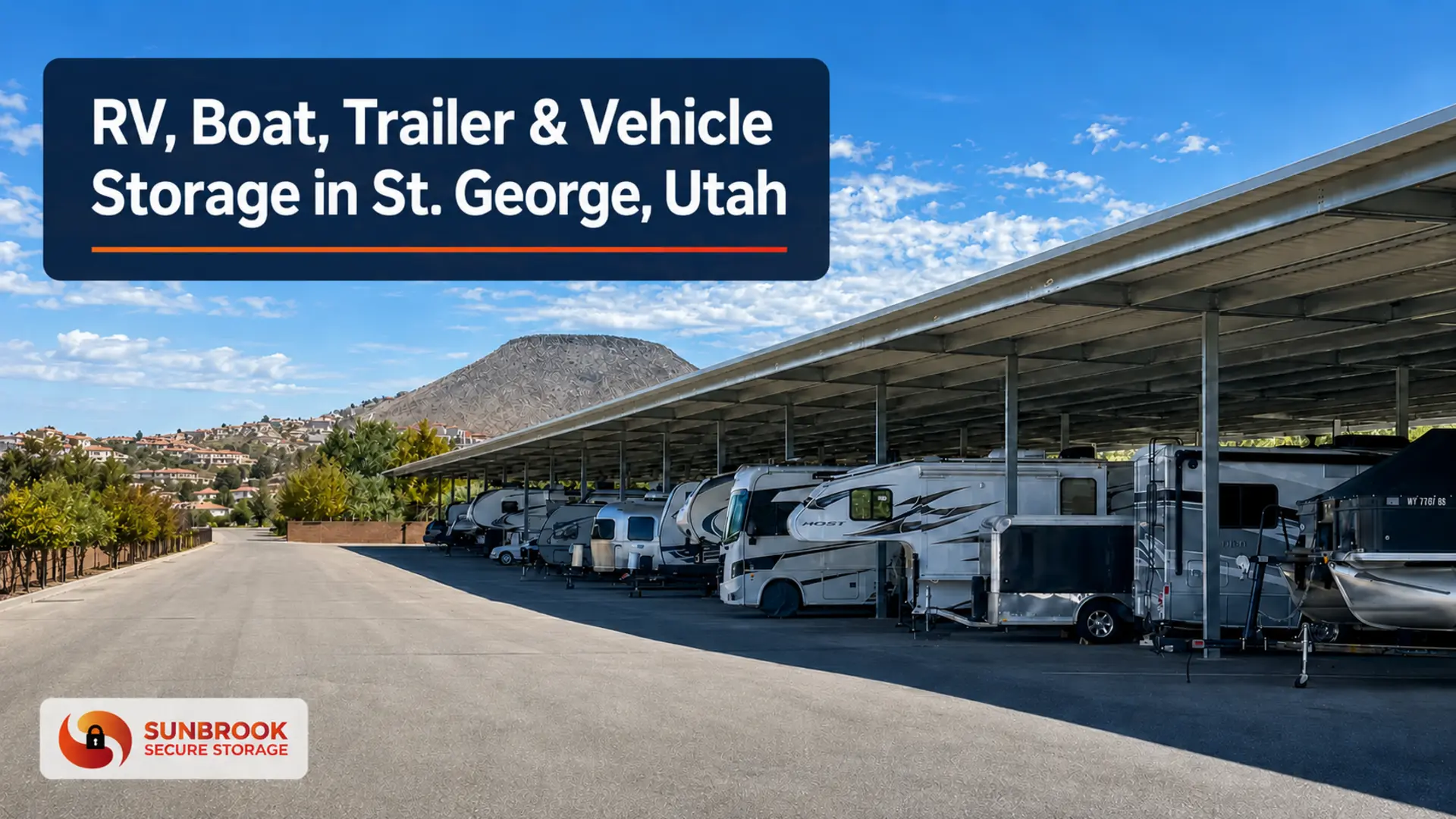
Covered RV storage in St. George, Utah gives motorhomes and trailers overhead protection from direct sun and weather while keeping them accessible between Southern Utah trips.
If you own an RV in Southern Utah, you already know the drill: the sun here is relentless, the summers are long, and your RV spends a lot more time parked than it does on the road. Whether you're heading to Zion, Snow Canyon, or Sand Hollow on the weekends, your rig needs a safe place to sit the rest of the week. At Sunbrook Secure Storage, we offer both covered and uncovered RV storage at our St. George facility so you can choose the parking option that fits your rig, your budget, and your travel schedule.
Quick Answer
Covered RV storage is an outdoor parking space with a roof overhead, reducing direct sun and weather exposure on your RV's roof, sealants, and exterior. Monthly pricing depends on space length, configuration (standard vs. pull-through), and whether trickle-charge access is included. Because advertised RV length rarely includes hitches, ladders, and accessories, you should measure the complete vehicle before renting. Current pricing and availability can change, so always confirm live rates and space sizes before arriving.
Key Takeaways
- Covered parking reduces direct overhead exposure but is still open-air outdoor storage—not an enclosed garage.
- Monthly pricing depends on space length, configuration, and features like trickle-charge access or pull-through access.
- Measure the entire RV, including permanently attached equipment like hitches, ladders, spare tires, and roof AC units.
- Not every covered space includes trickle-charge access—select spaces have it, and it is not a full electrical hookup.
- Sunbrook rents month to month rather than prorating short stays; a few days still rents as a full month.
- Confirm current sizes and availability before arriving with your RV, as inventory changes regularly.
Table of Contents
- What Is Covered RV Storage?
- Covered vs. Uncovered RV Storage
- RV Storage Sizes by Vehicle Type
- Security and Access
- RV Storage Costs in St. George
- What to Expect When Renting RV Storage at Sunbrook
- Is Covered RV Storage Worth It in St. George?
- How to Prepare Your RV for Storage
- Frequently Asked Questions
- Find Covered RV Storage in St. George, Utah
What Is Covered RV Storage?
Covered RV storage is an outdoor parking space with a roof or canopy structure above it. The roof blocks direct overhead sunlight, rain, hail, and falling debris, while the sides remain open to the air. It is not the same as enclosed indoor storage—your RV is still parked outdoors, just with overhead protection.
This distinction matters in Southern Utah. St. George's summer sun can be brutal on RV roofs, sealants, and exterior finishes. A covered space helps reduce that direct overhead exposure, which may slow wear on roof membranes, decals, and sealants. Many RV owners also use a fitted, breathable RV cover for additional protection, even under a covered space.
Covered parking is popular with owners who store their RV for longer stretches between trips—especially snowbirds and seasonal travelers who want to reduce sun exposure without the higher cost of a fully enclosed garage. If you use your RV every weekend, uncovered parking may be more convenient and budget-friendly. The key is matching the parking type to your RV, your usage pattern, and your budget.
Covered vs. Uncovered RV Storage
The main difference is simple: covered RV storage has a roof overhead, and uncovered RV storage does not. Both are outdoor parking spaces, not enclosed units. That means your RV is exposed to ambient air, dust, and side-angle sun either way—the roof just reduces direct overhead exposure.
Covered parking can help reduce wear on your RV's roof, sealants, exterior finishes, and interior temperatures. In Southern Utah, where summer temperatures regularly exceed 100 degrees, that overhead shade can make a noticeable difference in how hot the interior gets while parked. That said, covered storage is still open-air; it does not eliminate heat, dust, or wind. A fitted RV cover is still a smart addition for many owners, even in a covered space.
Uncovered parking is the simpler, more budget-friendly option. If you use your RV frequently—say, every other weekend—uncovered parking is very convenient. You just pull in, park, and go. If your RV already has a quality fitted cover and you're not storing it for months at a time, uncovered parking may be all you need. Many owners who travel regularly prefer uncovered parking for the ease of access and lower monthly cost.
Who might prefer covered parking? Owners who store their RV for weeks or months at a time, owners of higher-value motorhomes, and anyone concerned about long-term sun exposure on roof sealants and decals. Who might prefer uncovered parking? Frequent users, budget-conscious owners, and those whose RVs are already well-protected by a fitted cover. Neither option is inherently better—it depends on how you use your RV and what level of overhead protection you want.
Key takeaway: Covered parking reduces direct overhead sun and weather exposure but is still open-air outdoor storage; choose it for longer-term storage or higher-value rigs, and consider uncovered parking if you use your RV frequently and already use a fitted cover.
RV Storage Sizes by Vehicle Type
RV storage is not one-size-fits-all. Camper vans and Class B motorhomes are compact and may fit in shorter spaces. Class C motorhomes, travel trailers, and fifth wheels need more length. Class A motorhomes and large toy haulers need the longest spaces. But here's the catch: the advertised RV length almost never tells the full storage story.
A "30-foot travel trailer" might actually need 33 or 34 feet of parking space once you account for the trailer tongue, rear ladder, spare tire, and any bike rack or cargo carrier on the back. A Class A motorhome's brochure length may not include the rear ladder, tow bar, or roof accessories. This is why measuring the complete vehicle—bumper to bumper or, more accurately, hitch to ladder—is essential before renting a space.
Here's what to measure:
- Overall length: From the furthest front point (hitch, tongue, or bumper) to the furthest rear point (ladder, spare tire, or cargo carrier)
- Width: The widest fixed point, including slide-outs when extended for maneuvering
- Height: From the ground to the highest permanent point, including roof AC units, antennas, and satellite domes
- Permanent accessories: Trailer tongue, rear ladder, spare tire, bike racks, cargo carriers, tow bars, mirrors, and awning housings
Sunbrook's covered spaces are approximately 12 feet wide and are offered in multiple lengths, subject to current availability. We recommend leaving a reasonable margin rather than trying to fit into a space that matches your measurement exactly—maneuvering a 35-foot motorhome into a 35-foot space leaves no room for error.
Key takeaway: Measure the complete RV including all permanently attached accessories, then compare to Sunbrook's current covered space sizes—advertised RV length is almost always shorter than the actual storage footprint.
Security and Access
When you're storing a motorhome or trailer worth tens of thousands of dollars, facility security matters. Sunbrook's RV storage includes keypad-controlled gate access and security camera monitoring. Wide drive aisles make it easier to back in or pull through, even with a large rig. But facility security supplements—it doesn't replace—your own basic RV precautions.
Here are practical steps every RV owner should take before storing:
- Lock all doors, compartments, and storage bays
- Remove valuables, electronics, and personal items
- Photograph the RV's condition before storing it
- Maintain appropriate RV insurance coverage
- Secure external equipment like awnings, antennas, and outdoor furniture
- Keep registration and ownership documents elsewhere, not in the stored RV
- Confirm who is authorized to access the storage space
Customer gate-access hours at Sunbrook are:
- Monday–Friday: 6:00 a.m.–10:00 p.m.
- Saturday–Sunday: 7:00 a.m.–9:00 p.m.
Sunbrook does not offer 24/7 customer gate access. These published access hours give you a wide window to check on your RV, load up for a trip, or return after a weekend getaway. You can also manage your account and payments online, and rentals are month to month with no long-term contract required.
Key takeaway: Sunbrook provides keypad gate access, security cameras, wide drive aisles, and published access hours—combine these facility features with your own locks, insurance, and documentation to protect your RV.
RV Storage Costs in St. George
RV storage costs in St. George depend on several factors: covered versus uncovered parking, space length, pull-through versus standard configuration, trickle-charge access, current availability, and market conditions. There is no single flat rate—pricing scales with the space size and features you select.
As of the date this article was checked (August 2026), Sunbrook's advertised covered RV storage rates start at approximately $110 per month for a 12×25 covered space with trickle-charge access, and go up to approximately $270 per month for a 12×70 covered pull-through space. Standard covered spaces without trickle-charge access start at approximately $120 per month. These are current advertised rates, but rates and availability can change—always check current RV-storage prices and availability before renting.
One important detail: Sunbrook rents RV spaces month to month. If you only need a space for a few days or ten days, you still rent for the full month. Rentals are not prorated as short-term daily or weekly parking. This is standard for RV storage facilities and keeps the rental structure simple and predictable. If you have questions about current terms, contact the Sunbrook team directly.
Key takeaway: RV storage costs vary by space size, configuration, and features; Sunbrook rents month to month (not prorated for short stays), so always check live pricing and confirm your total vehicle fit before renting.
Not sure which space fits your RV?
Measure the complete vehicle from its furthest front point to its furthest rear attachment, then compare Sunbrook's current RV-storage sizes.
What to Expect When Renting RV Storage at Sunbrook
Here's the typical process for renting an RV-storage space at Sunbrook Secure Storage:
- Measure the complete RV. Include all permanently attached equipment—hitch, ladder, spare tire, roof accessories, and cargo carriers.
- Review available sizes. Check Sunbrook's current covered and uncovered space dimensions on the units and pricing page.
- Compare covered and uncovered options. Decide whether overhead protection is worth the additional monthly cost for your situation.
- Determine whether trickle-charge access is needed. Select covered spaces have trickle-charge power; standard covered spaces do not.
- Confirm current availability. Space inventory changes, so verify that a suitable space is available before arriving.
- Complete the monthly rental. Rentals are month to month with no long-term contract required.
- Prepare the RV before parking it. Clean, secure, and document the vehicle's condition.
We cannot promise a specific space is available until you confirm with us. If you're unsure which size fits, call 435-674-1974 and we'll help you figure it out.
Is Covered RV Storage Worth It in St. George?
For many Southern Utah RV owners, yes—covered storage is worth the additional monthly cost. But it depends on your specific situation. Here's how to decide:
If your RV is higher-value, if you store it for weeks or months between trips, or if you're concerned about direct sun on roof sealants and decals, covered parking is a sensible investment. Southern Utah's sun is intense, and reducing overhead exposure can help slow the aging of exterior finishes and roof membranes. Owners who store their rigs through the hottest summer months often find covered parking pays for itself in reduced maintenance and wear.
On the other hand, if you use your RV every weekend, if your rig already has a quality fitted cover, or if budget is the primary concern, uncovered parking may be the more practical choice. There's no point paying for overhead protection if you're barely parked long enough to benefit from it. And a good RV cover does a lot of the work a canopy does—at a lower monthly cost.
The bottom line: covered RV storage is worth it when you want to reduce direct sun exposure during longer storage periods, especially for higher-value rigs. Uncovered parking is worth it when you prioritize frequent access and lower monthly cost. Both are legitimate options at Sunbrook.
How to Prepare Your RV for Storage
Whether you choose covered or uncovered parking, a little preparation goes a long way. Here's a concise checklist:
- Clean the interior and exterior thoroughly
- Remove all food, trash, and anything that could attract pests
- Check tire pressure and inspect tires for wear
- Inspect roof seals and reseal if needed
- Disconnect or maintain batteries per manufacturer recommendations
- Close all windows, vents, and slides
- Protect against pests—consider screens or deterrents for openings
- Secure awnings and exterior equipment
- Photograph the RV's condition for your records
- Follow the manufacturer's storage and winterization recommendations
For a deeper dive on protecting your RV from Southern Utah's extreme heat, see our 10 tips to protect your RV from Southern Utah's heat. That article covers heat-specific preparation in more detail.
Frequently Asked Questions
How much does covered RV storage cost in St. George?
Covered RV storage costs vary by space length, configuration, and features. As of August 2026, Sunbrook's advertised covered rates range from approximately $110 to $270 per month. Rates and availability can change, so check the units and pricing page for current information.
What size RV-storage space do I need?
It depends on your complete RV length, width, and height—including all permanently attached accessories. Measure from the furthest front point to the furthest rear point, then compare to Sunbrook's current space sizes. Leave a margin for maneuvering rather than matching the measurement exactly.
Does covered RV storage protect an RV from all weather?
No. Covered storage reduces direct overhead sun and weather exposure, but it is still open-air outdoor parking. Sides are open, so wind, dust, and side-angle sun still reach the vehicle. A fitted RV cover adds an extra layer of protection.
Does Sunbrook offer electricity for RV storage?
Select covered spaces include trickle-charge access, which provides a low-amperage charge for maintaining batteries. This is not a full RV electrical hookup. Standard covered and uncovered spaces do not include electricity. Confirm availability of trickle-charge spaces when renting.
Can I access my RV at any time?
Customer gate-access hours are Monday–Friday 6:00 a.m.–10:00 p.m. and Saturday–Sunday 7:00 a.m.–9:00 p.m. Sunbrook does not offer 24/7 customer gate access.
Does Sunbrook offer short-term or prorated RV parking?
No. Sunbrook rents RV spaces month to month. If you need a space for only a few days or ten days, you still rent for the full month. Rentals are not prorated as short-term daily or weekly parking.
Can I store a fifth wheel or travel trailer?
Yes. Sunbrook's covered and uncovered spaces accommodate motorhomes, travel trailers, fifth wheels, toy haulers, and other vehicles. Measure the complete trailer including the tongue and any rear accessories to confirm fit.
Is covered RV storage worth the additional cost?
For many owners, yes—especially those storing higher-value rigs for longer periods between trips. Covered parking reduces direct overhead sun exposure on roof sealants and exterior finishes. If you use your RV frequently or already use a fitted cover, uncovered parking may be sufficient.
How should I measure my RV before renting?
Measure overall length from the furthest front point (hitch or bumper) to the furthest rear point (ladder, spare tire, or cargo carrier). Also measure width at the widest fixed point and height including roof AC units and antennas.
Can I reserve an RV-storage space online?
Yes. You can check current availability and reserve online through Sunbrook's rental portal. Confirm that the space size you need is available before arriving with your RV.
Find Covered RV Storage in St. George, Utah
Covered RV storage in St. George, Utah is a practical choice for motorhome and trailer owners who want overhead protection from Southern Utah's intense sun without the cost of a fully enclosed garage. Measure your complete RV, compare Sunbrook's current covered and uncovered space sizes, and confirm availability before you arrive.
Ready to find the right space? View Sunbrook's RV storage options, check current sizes and pricing, or call 435-674-1974 and we'll help you choose the right fit.

About The Sunbrook Team - Your Local Storage Experts
The Sunbrook Team specializes in indoor self storage and RV, boat, trailer and vehicle storage in St. George, Utah. From its facility at 415 S Dixie Drive, the team helps customers throughout Washington County compare storage sizes, prepare belongings and find practical storage options.
Related Articles
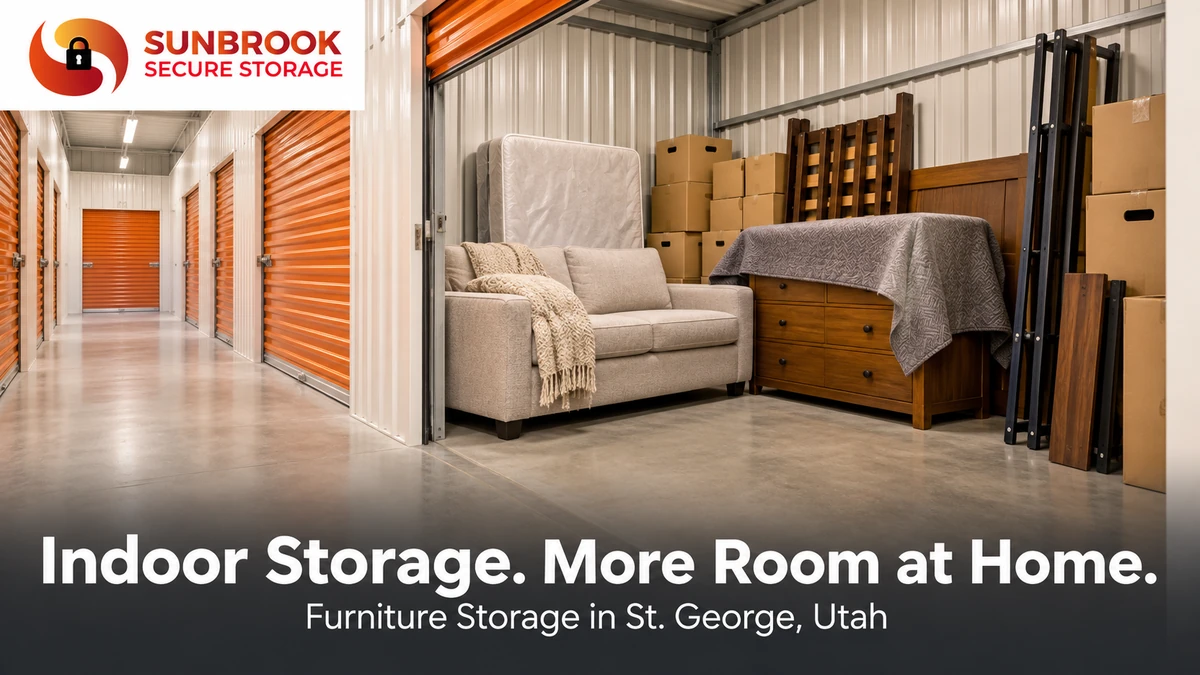
Indoor Furniture Storage in St. George, Utah: Packing Tips, Unit Sizes & Costs
Storing furniture in St. George, Utah? Get packing tips, unit sizing advice, and cost factors for indoor air-cooled storage at Sunbrook Secure Storage.

Storage Units for Snowbirds in St. George, Utah: What to Store Before Leaving for Summer
Leaving St. George for summer? Learn what to store, how to prepare belongings for Southern Utah heat, and how to choose an indoor air-cooled storage unit.
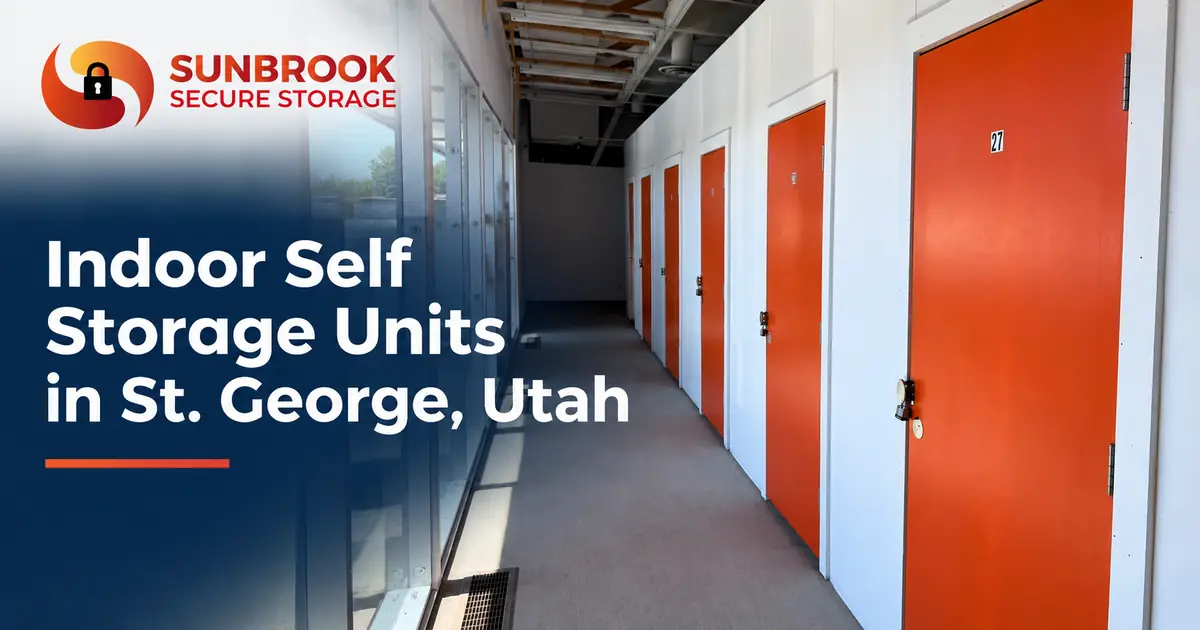
Indoor Self Storage Units in St. George, Utah
Compare indoor storage sizes, security and air-cooled features in St. George. Find the right Sunbrook storage unit and check availability today.